Bye-bye Britain: How will ‘Brexit’ affect Medical Librarianship?

The national extremists have won the battle. The UK is going to leave the EU. Labour laws, environmental standards, human rights will all be weakened. ‘Now the Tories are going to bring back slavery’, I said to a Welsh colleague. ‘No, serfdom’, she replied. I feel sorry for my friends and colleagues in the UK. And for myself and my wife as we watch our British pension plans and our house in London losing value.

But how is ‘Brexit’ going to affect our profession?

The UK has, so far, been one of the nations that set standards in medical librarianship. In future I’m afraid that all kinds of academic and professional exchange and joint activities will become more difficult. Switzerland, too, was penalised by the EU for that ‘mass immigration’ referendum in 2014 by being kicked out of Erasmus. But at least Switzerland has made an effort to replicate Erasmus using national funding. Access to EU research schemes is a big issue for a society built on knowledge and skills. And it is hard to imagine any UK government would show commitment comparable to that of Switzerland in this field.

Given the enormous contribution UK colleagues have made to medical librarianship over a long period of time, we medical librarians need to discuss how we can help them maintain their current standards. As a professional body, EAHIL must keep an eye on the development, and we will act in solidarity – just as we did with our motion against the threatened closure of ZB Med in Germany at the Seville conference.
Up north

Fränzi and I visited two medical libraries this week, both well respected amongst medical librarian colleagues, but each with its very own preferences and focus.

The library of the AMC (Academisch Medisch Centrum) in Amsterdam has to focus on resources for research, as its director, Dr. Lieuwe Kool, explained: funding does not allow licensing e-textbooks, nor the purchase of multiple print copies. On the plus side, the AMC library’s team of four information specialists offer an extensive programme of training courses and one-on-one support, especially for advanced publications like systematic reviews.

IMG_1447

The Münster Zweigbibliothek Medizin – voted Germany’s best special library by users – supports medical education better than probably any other medical library in Europe, with a substantial collection of multiple copies, e-books, apps, and even hundreds of borrowable iPads with the learning materials preinstalled. With the ‘Easyphysikum‘ project – all resources for the 1. Staatsexamen accessible on an iPad, Dr. Oliver Obst, the librarian, consolidated Münster’s role as innovative leader in medical education resources. Database training and enquiry services are available, too – and the building is comfortable, spacious, modern and well-lit.

It will be a long way until we here in Bern can compete against libraries like these…

Here it is: the EAHIL 2014 conference in Rome!

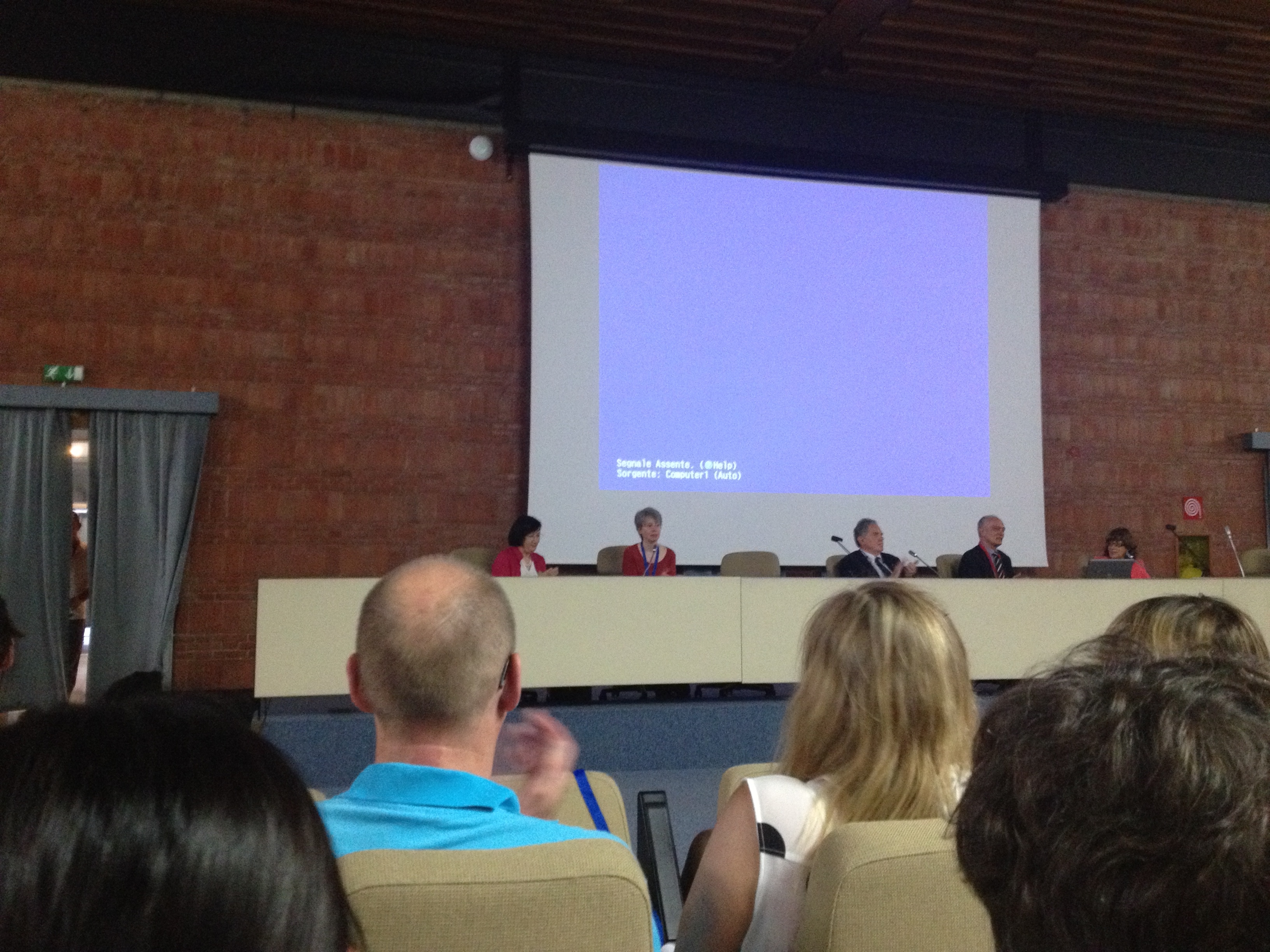
Opening ceremony  of the EAHIL 2014 conference at the Bibliotheca Nazionale Centrale, Rome
Opening ceremony

At last, I’m sitting in the lecture theatre of the Biblioteca Nazionale Centrale in Rome in the opening ceremony of EAHIL 2014. Browsing some of the posters as they were being put up in the foyer already brought me some new insights that I’ll have to build into my own work from now on. I really look forward to the all the things I’ll learn in the next three days!