Bye-bye Britain: How will ‘Brexit’ affect Medical Librarianship?

The national extremists have won the battle. The UK is going to leave the EU. Labour laws, environmental standards, human rights will all be weakened. ‘Now the Tories are going to bring back slavery’, I said to a Welsh colleague. ‘No, serfdom’, she replied. I feel sorry for my friends and colleagues in the UK. And for myself and my wife as we watch our British pension plans and our house in London losing value.

But how is ‘Brexit’ going to affect our profession?

The UK has, so far, been one of the nations that set standards in medical librarianship. In future I’m afraid that all kinds of academic and professional exchange and joint activities will become more difficult. Switzerland, too, was penalised by the EU for that ‘mass immigration’ referendum in 2014 by being kicked out of Erasmus. But at least Switzerland has made an effort to replicate Erasmus using national funding. Access to EU research schemes is a big issue for a society built on knowledge and skills. And it is hard to imagine any UK government would show commitment comparable to that of Switzerland in this field.

Given the enormous contribution UK colleagues have made to medical librarianship over a long period of time, we medical librarians need to discuss how we can help them maintain their current standards. As a professional body, EAHIL must keep an eye on the development, and we will act in solidarity – just as we did with our motion against the threatened closure of ZB Med in Germany at the Seville conference.

Parliament Hill Café beats ZB Med

On March 18th the news broke that the Senate of the Leibniz-Gemeinschaft had recommended to end funding ZB Med, Germany’s national library for Medicine and the second largest medical collection in the world.

Just a few days before North Londoners heard that the City of London Corporation (which owns Hampstead Heath) had decided to end the 33-year lease of the Parliament Hill Café to the d’Auria family, and hand the café over to the Benugo chain.

Three weeks later, 5,500 academics have signed a change.org petition to keep ZB Med, but the future of this important institution is still unclear. Meanwhile, over 23’000 supporters signed a petition against the City of London Corporation’s decision; Benugo – faced with such stiff opposition – subsequently withdrew its bid for the lease of the café.

ZB Med may simply be in the wrong business to attract a more substantial level of support from its customers.

Using the Evidence to Fight the Flue

It’s that time of the year again – as commuters on the train are sniffing, sneezing and coughing, the Neue Zürcher prints a guest commentary by Johannes G. Schmidt, a GP with an interest in Public Health, as well as Alternative Medicine, about the low efficacy of the flue vaccination. And the old debate between believers and doubters erupts all over again, with several letters to the editor within a good week.

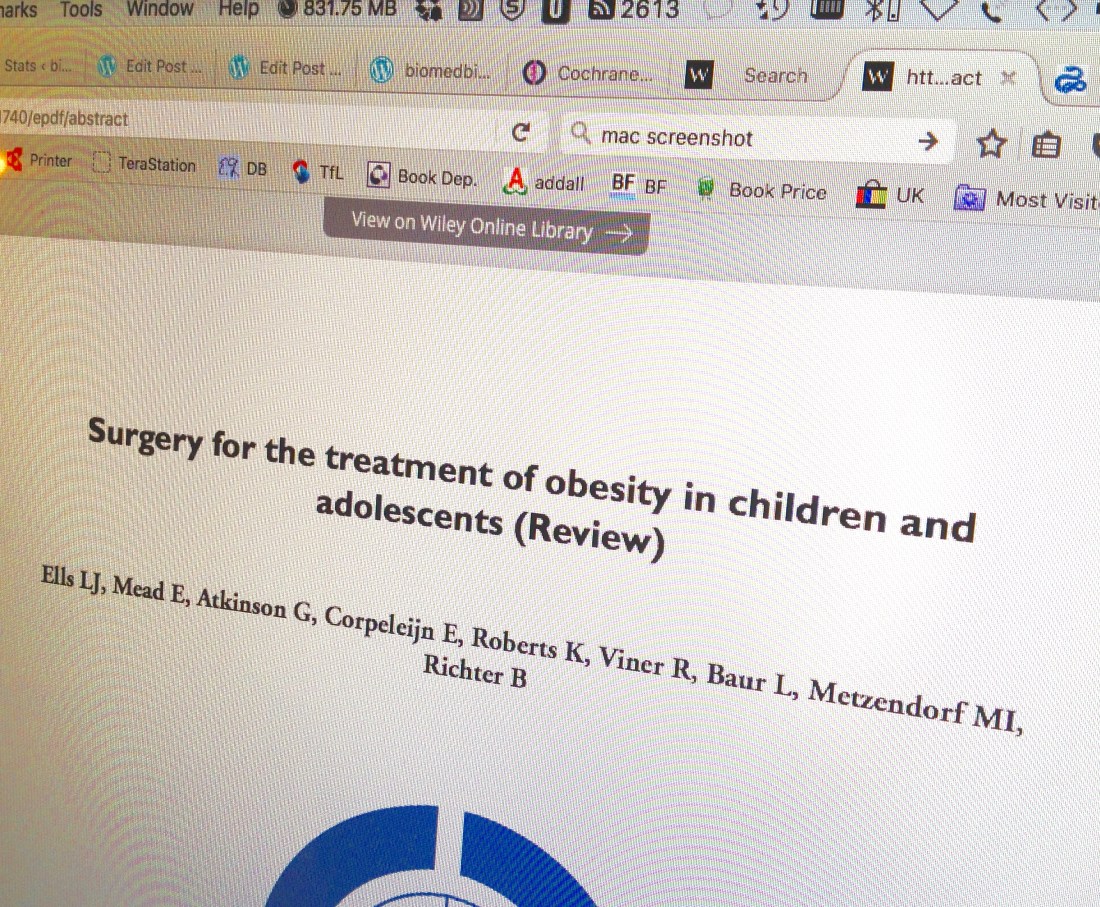
However, one thing is different this time: the Cochrane reviews both sides refer to, are now accessible to all of us in Switzerland, thanks to the national license by the Swiss Academy of Medical Sciences. Let’s see how access to the best evidence will influence public debate!

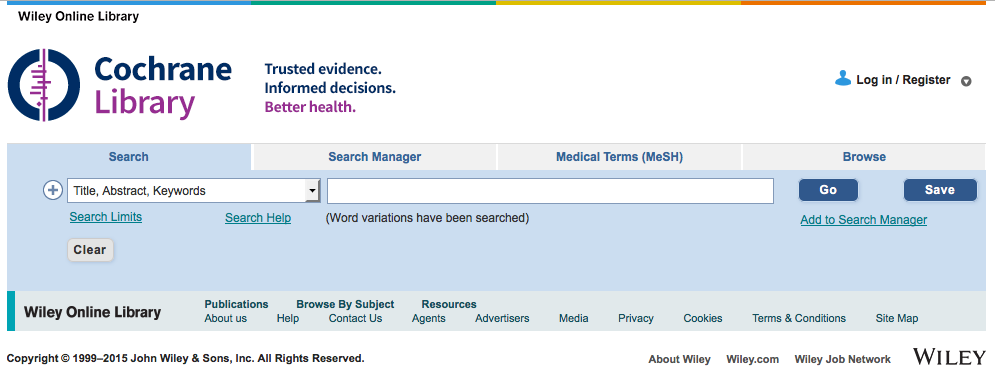
The National License for the Cochrane Library is here!

Screen Shot 2016-01-01 at 18.54.58

From today, the whole of Switzerland has access to the Cochrane Library, thanks to the efforts of and funding by the Swiss Academy of Medical Sciences. Under the aegis of the academy, funding from existing academic and hospital licences were pooled and the total topped up by the SAMS to allow the whole nation access. In the course of the next months, the SAMS will, jointly with medical and cantonal libraries and professional bodies, make healthcare professsionals throughout Switzerland aware of this license and introduce potential users to it in workshops and through other channels.

So far healthcare professionals in countries with a national health service, such as the UK and the Scandinavian countries, have benefitted from library services provided for them by their employer while in all-private systems, such as in Switzerland and Germany, doctors outside of university hospitals are left to their own means – they have access to those few journals they have personal subscriptions for. And I haven’t even mentioned the rich libraries professional bodies offer their members in addition to the NHS resources: the BMA, the RSM and all the royal colleges run extensive library services with a print collection in London or Edinburgh, remotely accessible e-resources, and support through experienced librarians. Evidence Based Medicine can only be practiced where there is access to the evidence, alongside the professional support with information retrieval.

The SAMS has made a first step – and a bold one. We Swiss medical librarians will do our utmost to make it a success. Let’s hope more e-resource licenses will join the Cochrane access in the future!

IMG_1480

Up north

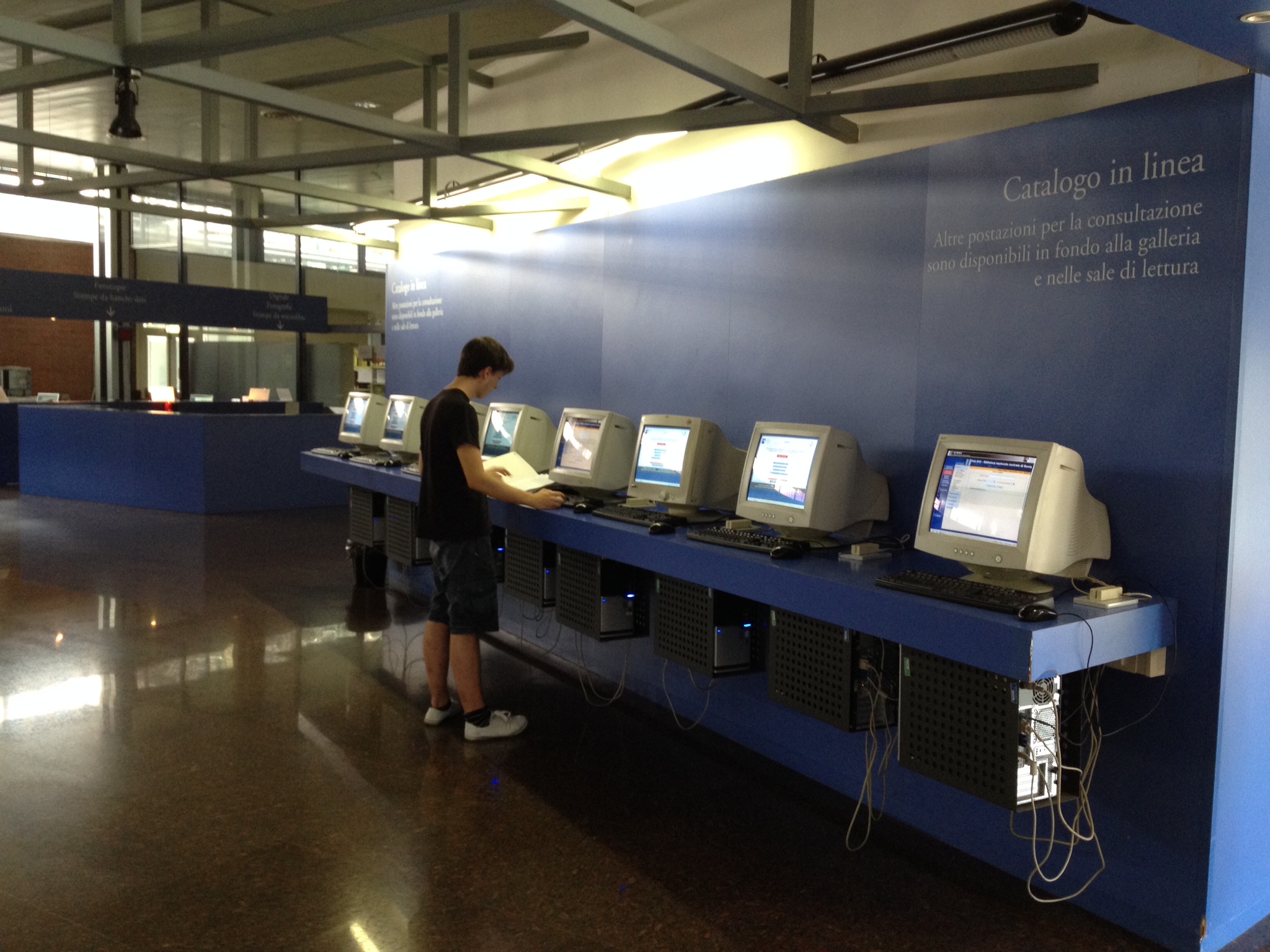
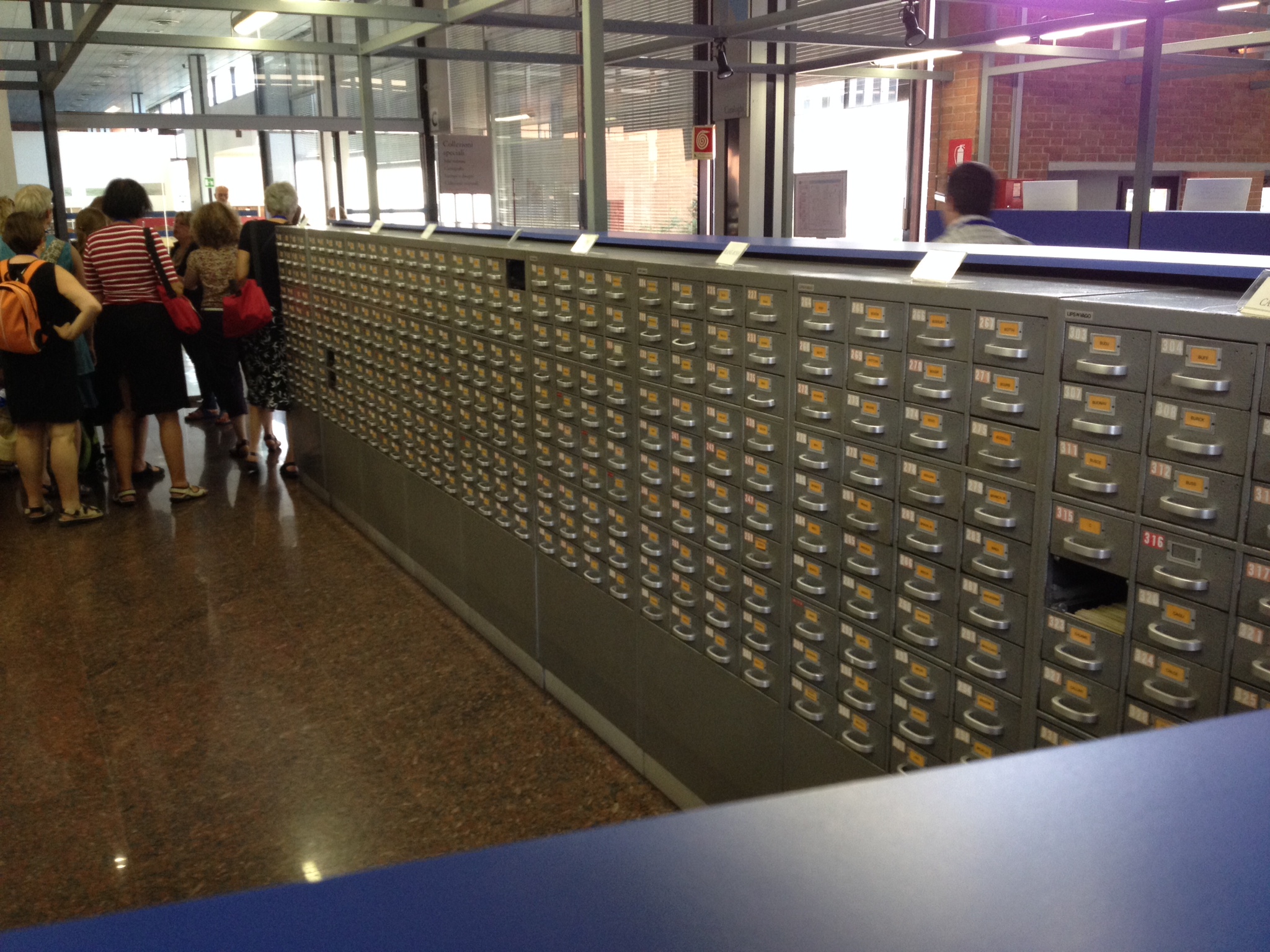
Fränzi and I visited two medical libraries this week, both well respected amongst medical librarian colleagues, but each with its very own preferences and focus.

The library of the AMC (Academisch Medisch Centrum) in Amsterdam has to focus on resources for research, as its director, Dr. Lieuwe Kool, explained: funding does not allow licensing e-textbooks, nor the purchase of multiple print copies. On the plus side, the AMC library’s team of four information specialists offer an extensive programme of training courses and one-on-one support, especially for advanced publications like systematic reviews.

IMG_1447

The Münster Zweigbibliothek Medizin – voted Germany’s best special library by users – supports medical education better than probably any other medical library in Europe, with a substantial collection of multiple copies, e-books, apps, and even hundreds of borrowable iPads with the learning materials preinstalled. With the ‘Easyphysikum‘ project – all resources for the 1. Staatsexamen accessible on an iPad, Dr. Oliver Obst, the librarian, consolidated Münster’s role as innovative leader in medical education resources. Database training and enquiry services are available, too – and the building is comfortable, spacious, modern and well-lit.

It will be a long way until we here in Bern can compete against libraries like these…

iPads in Medical Education – Apple Experts Roundtable, Amsterdam, Dec 14th, 2015

Being librarians, we buy or license e-books. Well, some libraries are getting into publishing – through repositories or OJS journal servers. But producing e-books, and competing with textbook publishers like Elsevier and Thieme? Is that any of our business?

Yes, why not? Programs like iBooks Author – a free-to-download programme from Apple – or, as a platform for a whole university press, Open Monograph Press from the Public Knowledge Project, allow all of us to produce e-books, even with multimedia and interactive content. Jochen Bretschneider from Vrije Universiteit Medical Centre in Amsterdam showed how as part of their ‘Mobile Learning Initiative‘ he and his team turn lecture notes into ibooks and enrich them with videoed surgical procedures, interactive elements etc.

We librarians spend huge and probably unsustainable amounts of money on e-books the vast majority of which make no use of the benefits the on-line platform offers (and quite a few even come in infuriating DRM restricted formats). At the same time quite a lot of teaching materials that our academics have created in-house, are dumped in poor formats in remote corners of Virtual Learning Environments or course websites. Wouldn’t it be worth setting a small proportion of our e-book budget aside, to allow our academics to experiment with the e-book format? Some of the content might turn out more useful than the e-books we have been licensing for so many years…

Is the iPad the successor to the printed textbook?

Oliver Obst reported the findings from a large-scale iPad trial in Münster – a project he first mentioned at the 2013 AGMB conference in Berlin, the outcome of which many of us have been eagerly awaiting.

With the transition of journals to the on-line format completed, the Münster ZB Medizin investigated the potential of a similar conversion of student textbooks. A survey amongst students showed strong penetration of traditional (i.e. print) textbooks, complemented with on-line (multiple choice) training materials, lecture notes and on-line textbooks. Students tend to use the lecture notes in electronic format, annotating them and sharing them within their revision groups through cloud services.

The Münster library decided to build on the popularity of the tablet as a learning and revision tool, and piloted loanable, pre-loaded iPads (85 of them!) alongside content bundles for download to students’ personal iPads (70 of those). Students quickly adopted the iPad, even changing their revision habits to make best use of the new tool. The learning tools also integrate with external tools, such as communication or calendar.

So is the iPad the heir to the throne? Oliver Obst’s answer was along the lines that – although each medium was so unique there was never a 100% successor to anything -, the iPad integrates the functions of the textbook with many additional ones. A future device that expands the capabilities of the platform even further, might, indeed, replace the printed textbook for good. However, the big hurdle of making content available, in the form of site-licensed apps, will have to be overcome.

Negotiating licenses for a wide range of healthcare providers

The Spanish province of Andalusia has set up an eHealth service that provides on-line resources to all users across the healthcare system, Laura Muñoz-Gonzales reported. The new service provides an impressive range of service, replacing a large number of institutional subscriptions and delivering better value for money. To my amazement, the project met the support of institutional librarians who had to give up part of their budget towards the centralised resource purchasing!

As far as I can see, the gap in access to a decent range of information resources is widening all the time between countries with a central or national health service, and countries with an all-private healthcare system. The level of information services Laura presented currently has no match in countries with a private healthcare system.

Elsevier out of sync with Elsevier?

Francesca Gualteri reported about her library in a pharmaceutical company’s use of Elsevier’s ‘Mendeley’ to manage the internal literature repository. Interestingly, she mentioned problems with the importing, especially of Elsevier publications. Others in the audience confirmed these issues. I suppose quite a few of the participants at the conference are going to ask the Elsevier reps at their stall about this issue…