Using the Evidence to Fight the Flue

It’s that time of the year again – as commuters on the train are sniffing, sneezing and coughing, the Neue Zürcher prints a guest commentary by Johannes G. Schmidt, a GP with an interest in Public Health, as well as Alternative Medicine, about the low efficacy of the flue vaccination. And the old debate between believers and doubters erupts all over again, with several letters to the editor within a good week.

However, one thing is different this time: the Cochrane reviews both sides refer to, are now accessible to all of us in Switzerland, thanks to the national license by the Swiss Academy of Medical Sciences. Let’s see how access to the best evidence will influence public debate!

The National License for the Cochrane Library is here!

Screen Shot 2016-01-01 at 18.54.58

From today, the whole of Switzerland has access to the Cochrane Library, thanks to the efforts of and funding by the Swiss Academy of Medical Sciences. Under the aegis of the academy, funding from existing academic and hospital licences were pooled and the total topped up by the SAMS to allow the whole nation access. In the course of the next months, the SAMS will, jointly with medical and cantonal libraries and professional bodies, make healthcare professsionals throughout Switzerland aware of this license and introduce potential users to it in workshops and through other channels.

So far healthcare professionals in countries with a national health service, such as the UK and the Scandinavian countries, have benefitted from library services provided for them by their employer while in all-private systems, such as in Switzerland and Germany, doctors outside of university hospitals are left to their own means – they have access to those few journals they have personal subscriptions for. And I haven’t even mentioned the rich libraries professional bodies offer their members in addition to the NHS resources: the BMA, the RSM and all the royal colleges run extensive library services with a print collection in London or Edinburgh, remotely accessible e-resources, and support through experienced librarians. Evidence Based Medicine can only be practiced where there is access to the evidence, alongside the professional support with information retrieval.

The SAMS has made a first step – and a bold one. We Swiss medical librarians will do our utmost to make it a success. Let’s hope more e-resource licenses will join the Cochrane access in the future!
IMG_1480

How To Do a Systematic Review 

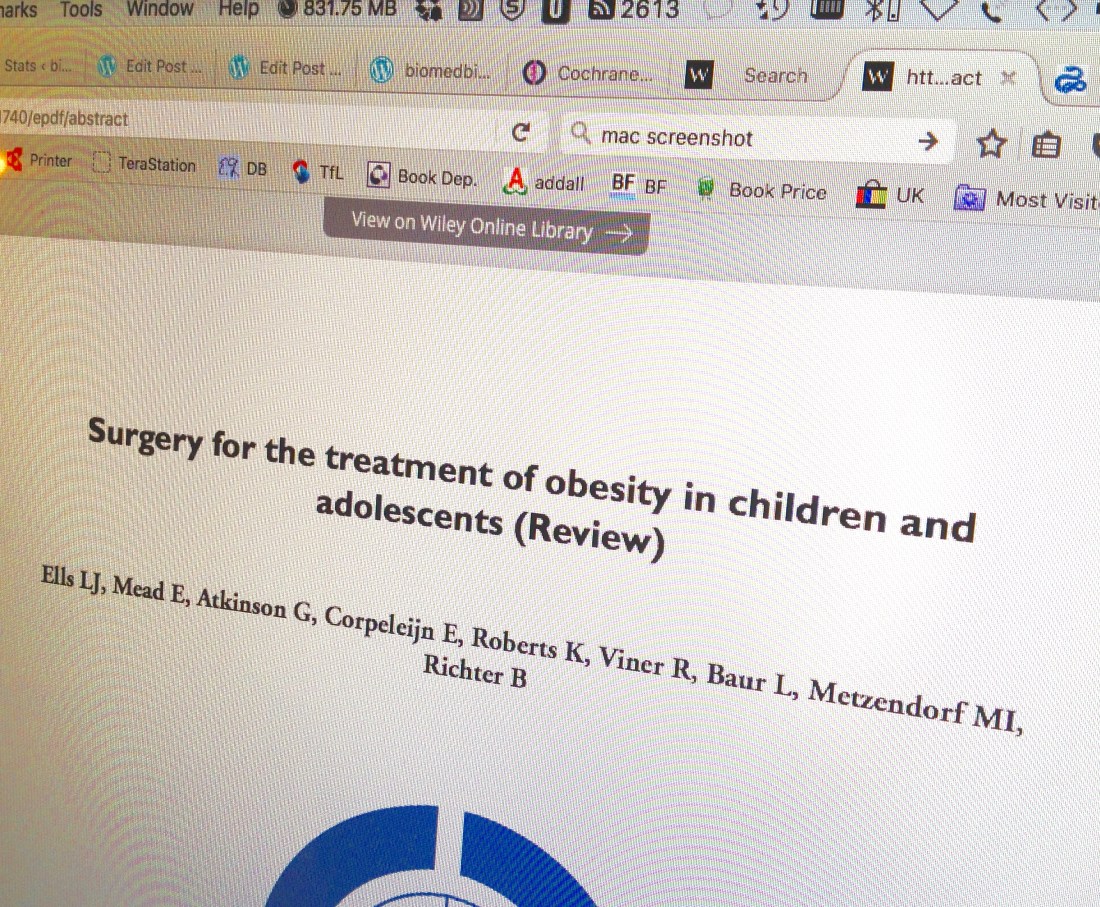
This is a question medical librarians are often asked by prospective authors of systematic reviews. Books on the topic are usually weak on the librariany bits – the chapter on literature searching tends to consist of a descriptive list of databases, combined with the advice to ‘ask a medical librarian’… Fortunately, some colleagues have written useful guidance on the whole process. Here is a selection of some really outstanding library websites on literature searching for systematic reviews:

Each of these sites contains a wealth of references to both further reading and training courses. Of course, the range of training materials provided by the Cochrane Collaboration should not be forgotten either.

How committed are our young doctors to EBM?

EBM has, over the last forty years, become the fundamental principle of clinical practice – or, so we thought. Marte Ødegaard reported to the EAHIL 2014 conference about her assessment of final-year students’ knowledge management skills which they have to demonstrate in an assignment. Her analysis showed that a significant proportion of future doctors lack even basic literature searching skills.

Oslo university is addressing the problem, but many in the audience were left feeling uneasy how a similar evaluation would have turned out at our own institutions…

Medical librarians of all nations unite!

Four Scandinavian colleagues proposed that medical librarians across EAHIL collaborate in the field of Information Skills Teaching. They had carried out a survey that clearly demonstrated wide-spread support for sharing teaching materials, but also experiences.

Interestingly, a parallel effort to establish a shared resource for librarians teaching EBM started recently on an MLA forum, and led to the creation of a resource pool (hosted by Northeast Ohio Medical University) and a – still informal – mailing list. Let’s see if these two groups will join forces!