Ken Chad on Library Services Platforms

Ken Chad just released his briefing paper ‘Rethinking the Library Services Platform‘ on his HELibTech wiki. It’s an excellent overview – Ken has been surveying library technology for about twenty years, and has maintained great independence both from individual vendors and from the Open Source movement.

While every vendor currently markets their latest offering as a ‘platform’ rather than an LMS or ILS, Ken defines the term ‘platform’ as a technical standard that enables interoperability of various vendors’ applications; something that goes significantly beyond the few APIs today’s systems offer. The ‘Cloud’ could facilitate such interoperability because connectivity between different vendors’ applications doesn’t have to be replicated for every single end user, and data can be shared rather than copied into customers’ set-ups.

Where I don’t quite agree with Ken is his take on OSS vs. proprietary. Ken seems to think that only big companies such as EBSCO and Proquest can fund the technological development needed for the creation of the next generation of library software, while OSS struggles ‘to catch up with hundreds of person-years of development, testing, and documentation’.  Is that really so? I’ve worked with an Open Source LMS (Koha), and was amazed how fast it developed – and how little it cost to have new features coded. And I’ve worked with a mainstream proprietary LMS (Aleph), and have been perplexed how little that has changed in nearly twenty years, and how much the vendor still charges for their ‘vintage’ product. (How much would you be prepared to pay for Windows 98 these days?).

Having said that, I do share Ken’s vision of interoperable, modular, Cloud-based library software. I just hope libraries take the lead in developing their platform Open Source. To me, Kuali OLE has been the most promising development in recent years.

Using the Evidence to Fight the Flue

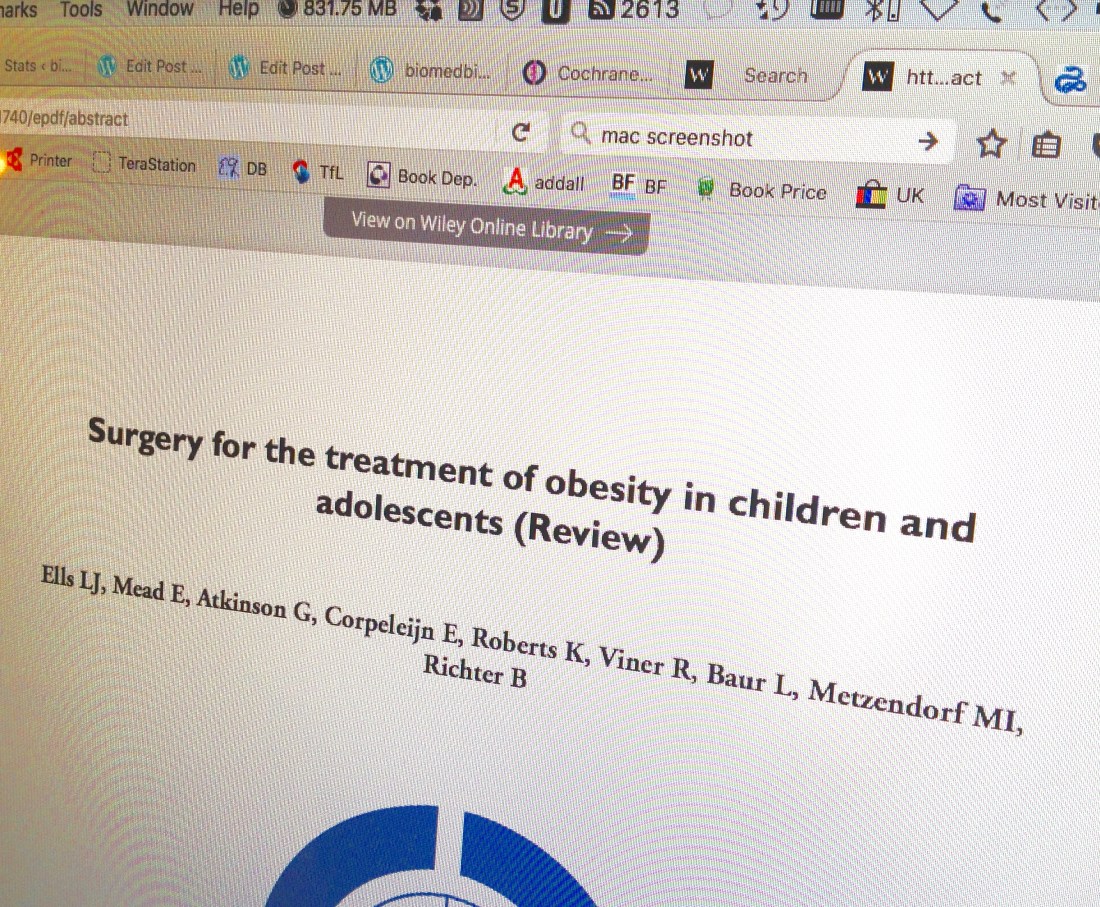
It’s that time of the year again – as commuters on the train are sniffing, sneezing and coughing, the Neue Zürcher prints a guest commentary by Johannes G. Schmidt, a GP with an interest in Public Health, as well as Alternative Medicine, about the low efficacy of the flue vaccination. And the old debate between believers and doubters erupts all over again, with several letters to the editor within a good week.

However, one thing is different this time: the Cochrane reviews both sides refer to, are now accessible to all of us in Switzerland, thanks to the national license by the Swiss Academy of Medical Sciences. Let’s see how access to the best evidence will influence public debate!

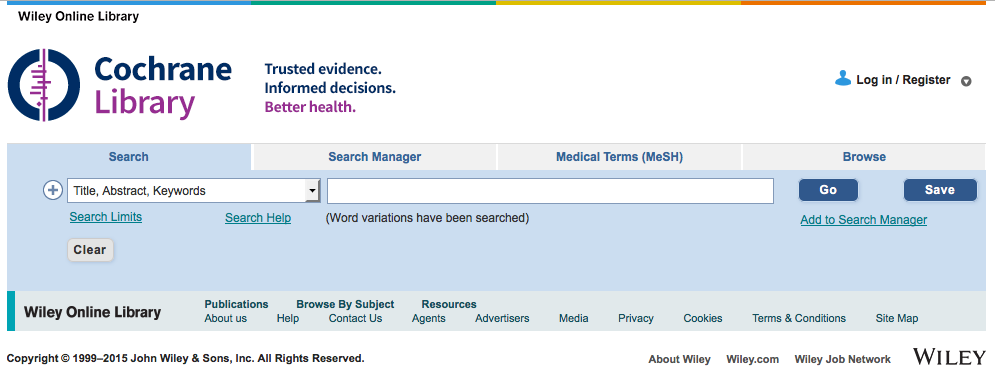
The National License for the Cochrane Library is here!

Screen Shot 2016-01-01 at 18.54.58

From today, the whole of Switzerland has access to the Cochrane Library, thanks to the efforts of and funding by the Swiss Academy of Medical Sciences. Under the aegis of the academy, funding from existing academic and hospital licences were pooled and the total topped up by the SAMS to allow the whole nation access. In the course of the next months, the SAMS will, jointly with medical and cantonal libraries and professional bodies, make healthcare professsionals throughout Switzerland aware of this license and introduce potential users to it in workshops and through other channels.

So far healthcare professionals in countries with a national health service, such as the UK and the Scandinavian countries, have benefitted from library services provided for them by their employer while in all-private systems, such as in Switzerland and Germany, doctors outside of university hospitals are left to their own means – they have access to those few journals they have personal subscriptions for. And I haven’t even mentioned the rich libraries professional bodies offer their members in addition to the NHS resources: the BMA, the RSM and all the royal colleges run extensive library services with a print collection in London or Edinburgh, remotely accessible e-resources, and support through experienced librarians. Evidence Based Medicine can only be practiced where there is access to the evidence, alongside the professional support with information retrieval.

The SAMS has made a first step – and a bold one. We Swiss medical librarians will do our utmost to make it a success. Let’s hope more e-resource licenses will join the Cochrane access in the future!

IMG_1480